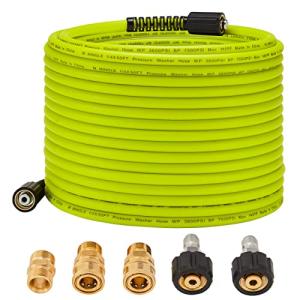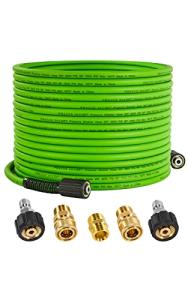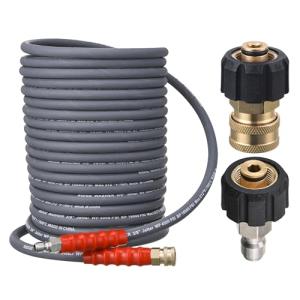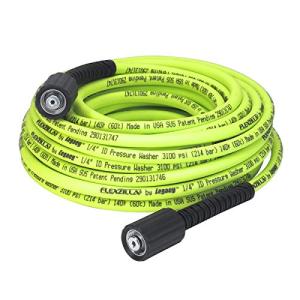
A pressure washer hose that constantly kinks, twists or tangles can turn a quick cleaning job into a frustrating one. Whether you’re cleaning a patio, driveway or vehicle, hose kinks interrupt the water flow and force you to stop and straighten the line repeatedly.
Fortunately, there are several easy techniques and small habits you can use to stop a pressure washer hose from kinking – and to prevent it from happening in the first place. This guide covers the most effective fixes you can use right away.
Quick Answer: To stop a pressure washer hose from kinking, use a flexible high-quality hose, avoid tight bends during use, and store it properly by coiling it loosely after each cleaning session.
Why Pressure Washer Hoses Kink
Kinking usually happens when the hose is:
- Coiled incorrectly after use
- Stored in tight loops that weaken flexibility over time
- Dragged around corners at sharp angles
- Twisted internally from repeated winding and unwinding
- Not fully unwound before use
The good news is that kinking is almost always preventable with simple adjustments to how you store and use your hose.
1. Fully Unwind the Hose Before Switching On
A partially coiled hose is far more likely to twist as pressure builds. Before starting:
- Unwind the entire hose to its full length
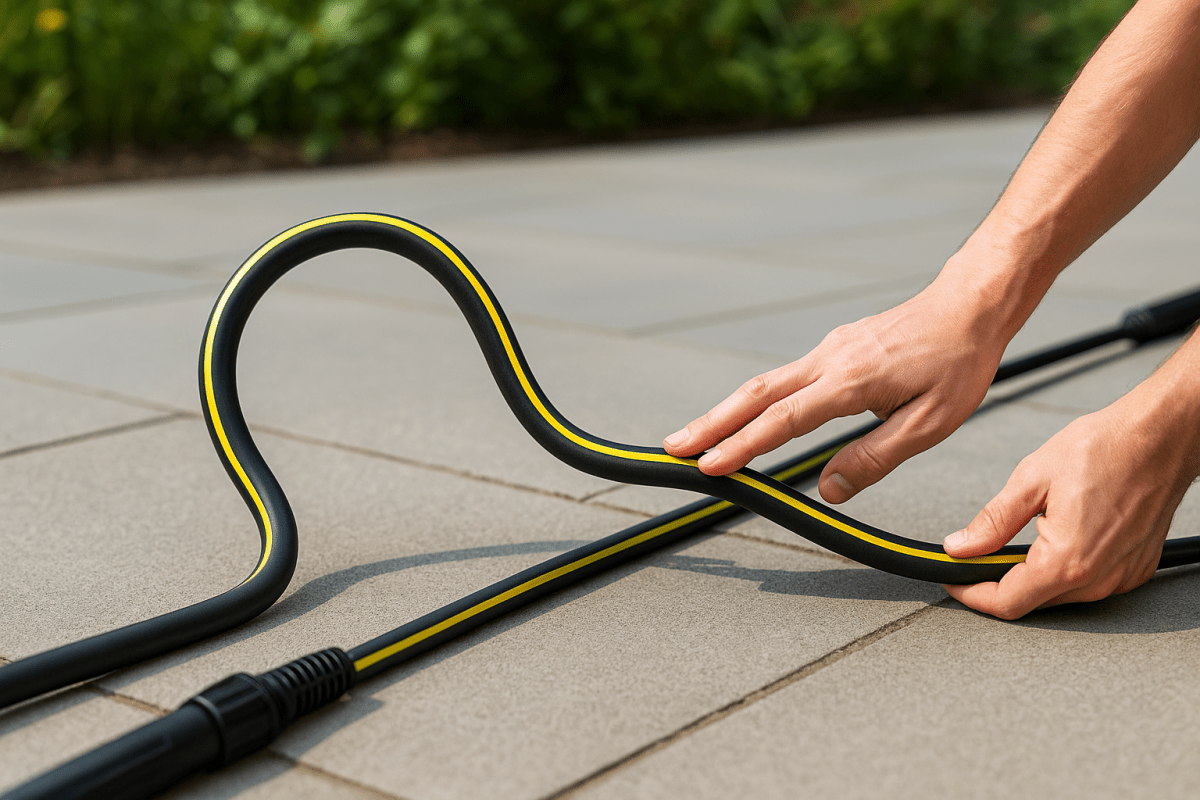
- Lay it out straight along the ground
- Remove any loops or small twists before starting the machine
This one step alone prevents most kinks.
2. Use the “Over–Under” Coiling Method
Many hoses kink because they are coiled the same way every time, forcing a twist into the internal structure. The over–under method alternates the direction of each loop, which keeps the hose naturally untwisted and far easier to use.
To coil your hose correctly:
- Make one loop in a natural direction (over)
- Make the next loop in the opposite direction (under)
- Repeat until fully coiled
This method is used by professionals for cables, ropes and garden hoses because it dramatically reduces tangling.
3. Avoid Tight Storage Loops
When stored in very tight circles, a hose “remembers” the shape, making it more likely to kink during use. Ideally, your storage loops should be:
- Large (40–60cm diameter)
- Evenly sized throughout the coil
- Loose enough to avoid internal stress
If a hose has been stored tightly for years, stretching it out fully in the sun can help restore flexibility.
4. Straighten the Hose in Warm Weather
Pressure washer hoses become more flexible in warm conditions. Laying the hose straight across a sunny patio, driveway or lawn for 20–30 minutes softens the material and makes it much easier to untangle.
This works especially well for PVC hoses, which stiffen in cold conditions.
5. Upgrade to a More Flexible Hose
Some hoses kink more than others simply because of their material. If you’re finding your hose increasingly difficult to work with, upgrading may save time and stress.
- PVC hoses are affordable but may kink more easily
- Rubber hoses stay flexible and resist kinking better
- Steel-braided hoses are premium, durable and excellent for regular cleaning
If your current hose is more of a problem than a help, consider exploring our guide to the best replacement options for 2025.
6. Keep the Hose Straight During Use
When cleaning, try to keep the hose’s path as straight as possible by:
- Positioning the pressure washer close to your main working area
- Walking the hose back to its starting point to remove twists
- Avoiding sudden sharp turns around walls, posts or obstacles
Even a few small adjustments can dramatically reduce kinking.
When to Consider Replacing Your Hose
If your hose:
- Feels stiff even in warm conditions
- Kinks constantly despite proper coiling
- Has visible cracks or flattening
- Leaks around connectors
…then it may be time to consider a new one. Modern hoses are lighter, more flexible and easier to use than older heavy PVC versions.