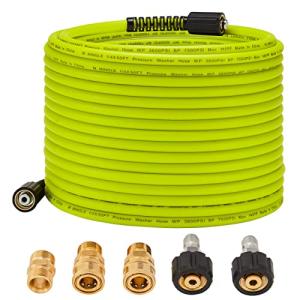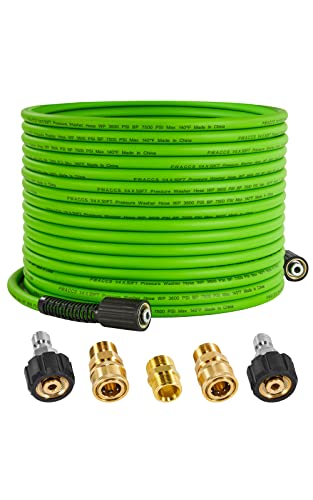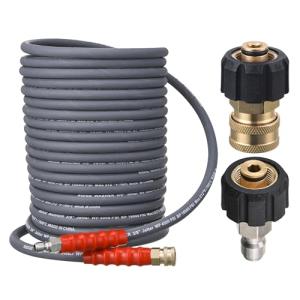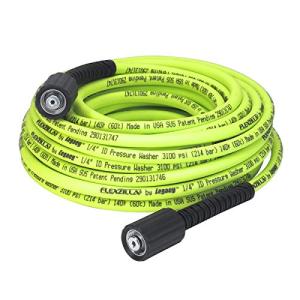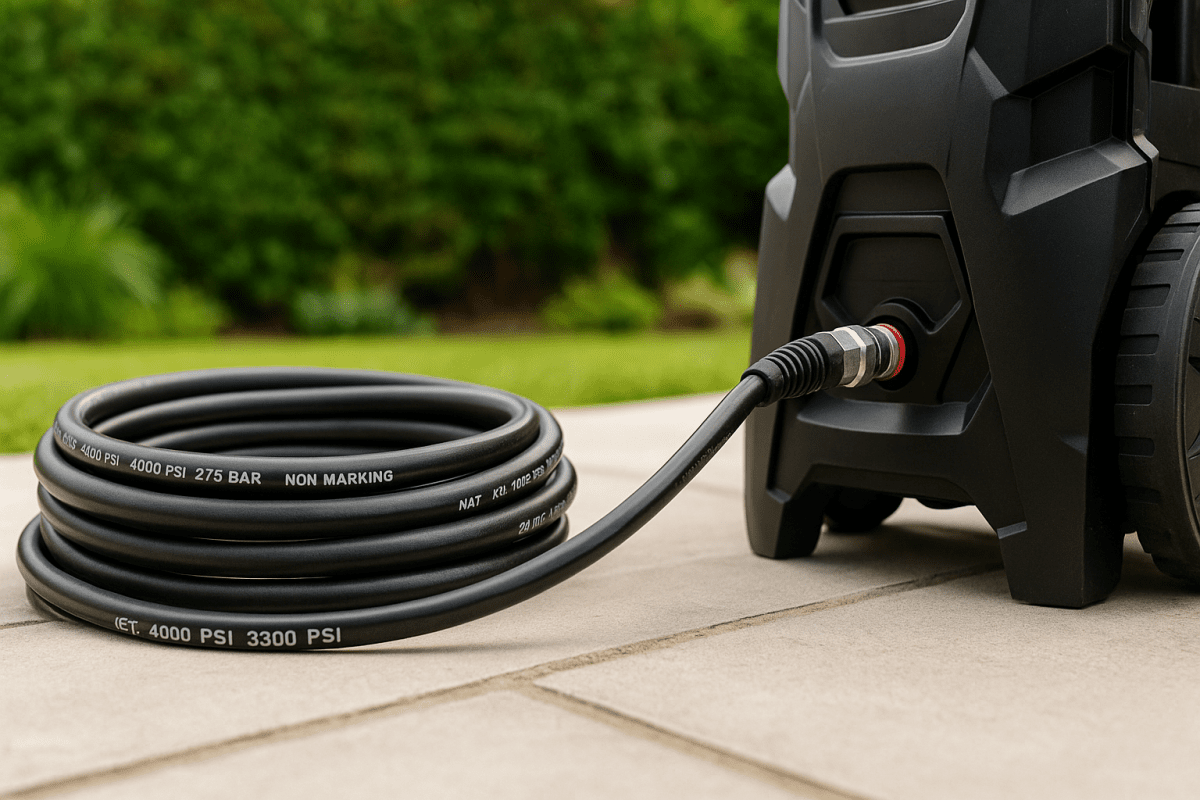
Every pressure washer hose is designed to withstand a specific amount of pressure. This is shown as a PSI (pounds per square inch) rating. Using a hose with the wrong PSI can lead to leaks, poor performance or dangerous bursts. This guide explains hose PSI ratings and how to match them to your machine safely.
What Does PSI Mean?
PSI measures how much pressure the hose can safely handle. A hose must be rated equal to or higher than the pressure washer’s maximum output.
Example: If your pressure washer produces 2,500 PSI, your hose must be rated for at least 2,500 PSI.
Common Hose PSI Ratings
1,500–2,000 PSI
- Suitable for light-duty electric pressure washers
- Ideal for car washing and light outdoor cleaning
2,000–3,000 PSI
- Standard range for most electric and small petrol washers
- Good for patios, decking and garden furniture
3,000–4,000 PSI
- For more powerful petrol washers
- Ideal for concrete, driveways and heavy dirt
4,000+ PSI
- Professional-grade hoses
- Steel-braided hoses recommended
- Used for industrial cleaning
Choosing The Right PSI For Your Washer
Always match the hose to your washer’s maximum rated PSI. You can use a hose with a higher PSI than your machine produces, but never a lower one.
- Electric washers (1,300–2,000 PSI): Light-duty hoses are fine
- Small petrol washers (2,500–3,000 PSI): Choose mid-range hoses
- Large petrol washers (3,000–4,000 PSI): Use heavy-duty hoses
- Pro washers (4,000+ PSI): Use steel-braided or industrial hoses
What Happens If You Use The Wrong PSI?
- Low PSI hose on high PSI washer: Risk of bursting or tearing
- High PSI hose on low PSI washer: Completely safe
- Incorrect connectors: Leaks or pressure loss
PSI And Hose Lifespan
Higher-PSI hoses are usually built tougher, but they may feel heavier and less flexible. Choose a hose that balances strength and usability based on what you clean most often.