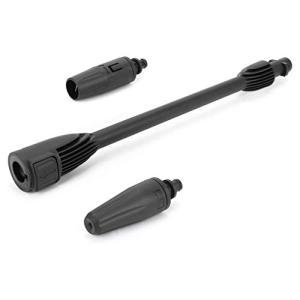
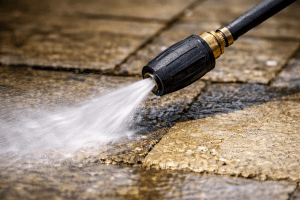
Pressure washer nozzles control the spray angle and intensity of water coming out of your machine. Choosing the right nozzle makes cleaning faster, safer and more effective — but using the wrong one can cause damage or poor results. This guide explains what each nozzle does and when to use it.
Quick Answer: Pressure washer jet nozzles control the spray angle and pressure intensity, with different colours representing specific spray patterns for tasks like rinsing, general cleaning, or heavy-duty dirt removal.
The Five Main Pressure Washer Nozzle Types
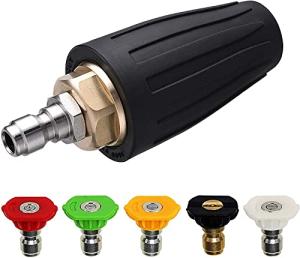
Most pressure washers use colour-coded nozzles. Here’s what each one means:
0° Nozzle (Red – Maximum Power)
- Very strong, concentrated jet
- Best for metal, stone and stubborn dirt
- Never use on cars, wood, paint or delicate surfaces
15° Nozzle (Yellow – Heavy Cleaning)
- Powerful but safer than 0°
- Great for driveways, brick, tools and machinery
- Often used for surface prep like removing old paint
25° Nozzle (Green – General Cleaning)
- Balanced cleaning power and safety
- Ideal for patios, decks, fences and garden furniture
- The most versatile home-use nozzle
40° Nozzle (White – Gentle Cleaning)
- Wide spray for light cleaning
- Safe for cars, windows, bikes, outdoor fabrics
- Good for rinsing and applying detergents
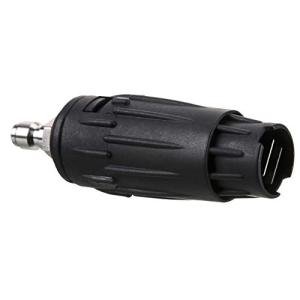
Turbo Nozzle (Rotating Jet)
- Combines 0° power with a rotating spray pattern
- Cuts through deep grime on stone, concrete and brick
- Not suitable for delicate surfaces
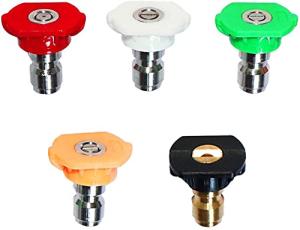
5 Spray Nozzles for 4000 PSI Pressure Washers
Get the versatility you need to tackle any cleaning job with these five easy-to-change nozzles designed for heavy-duty performance
Product information
£5.99
Product Review Score
4.27 out of 5 stars
66 reviewsProduct links
Which Nozzle Should You Use?
- Cars & Bikes: 40°
- Patios & Decking: 25°
- Driveways & Concrete: 15° or Turbo
- Metal & Machinery: 15°
- Brick & Stone: Turbo or 15°
- Rinsing & Light Dust: 40°
Nozzle Tips For Best Results
- Start with a wider angle and move to stronger jets if needed
- Hold the lance 30–50 cm from the surface
- Keep the jet moving to avoid etching
- Use turbo nozzles only on hard surfaces