Not every cleaning job requires high pressure. In fact, some surfaces can be damaged easily by strong jets, including car paint, wood decking, outdoor furniture, house siding and soft materials. No-pressure pressure washing (often called soft washing) lets you clean safely using low pressure and the right detergents instead of force.
What Is No-Pressure Pressure Washing?
No-pressure pressure washing uses:
- Low-pressure spray (40° nozzle or foam nozzle)
- Soft detergents that lift dirt chemically
- Gentle rinsing techniques
This method cleans without blasting the surface, preventing scratches, etching or water intrusion.
Best Uses For No-Pressure Washing
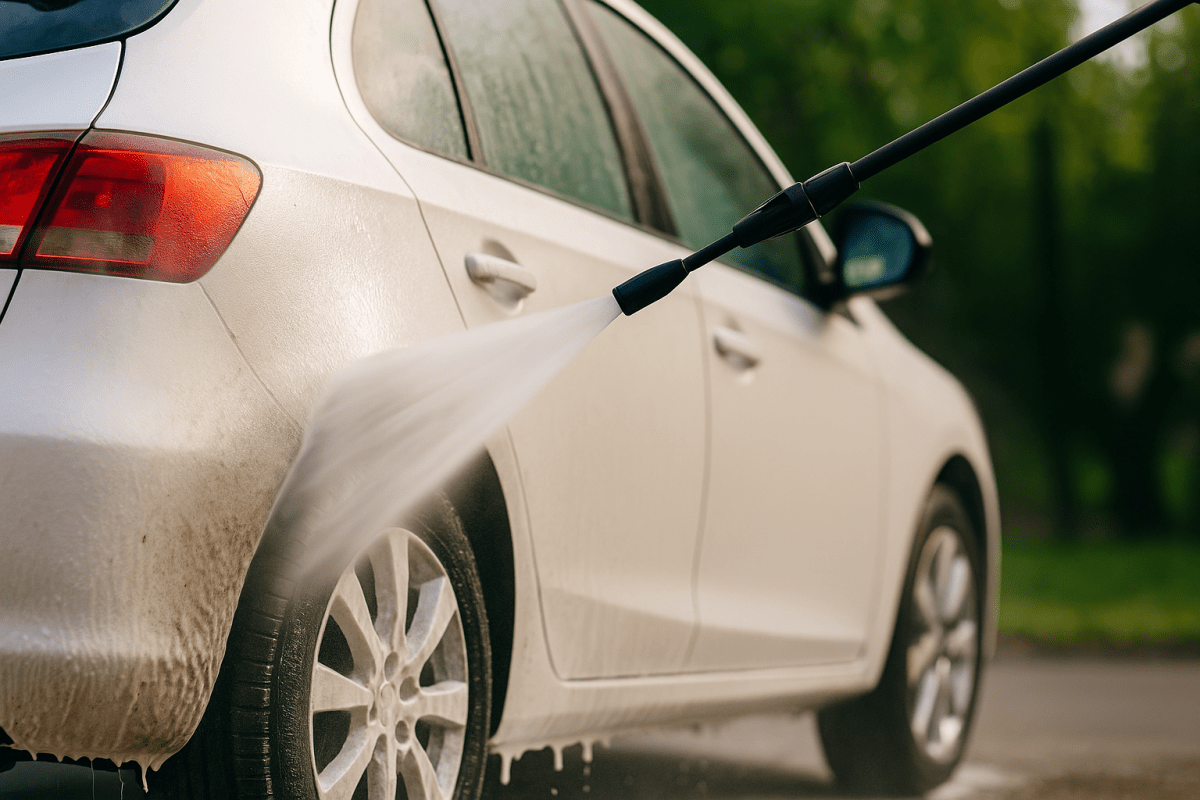
1. Car Cleaning
- Safe for paint and trim
- Use a foam cannon or 40° nozzle
- Let detergent dwell before rinsing
2. House Siding
- Prevents water getting behind panels
- Use low-pressure rinsing only
- Apply siding-safe detergent first
3. Wood Decking & Fencing
- High pressure can scar or raise wood grain
- Use gentle cleaners and wide spray angles
- Rinse lightly to avoid damage
4. Outdoor Furniture
- Ideal for fabrics, plastics and soft materials
- Apply cleaner first, then rinse gently
Recommended Tools For No-Pressure Washing
- 40° white nozzle
- Foam cannon or detergent bottle
- Low-pressure detergent-safe setting
- Soft-bristle brush (if needed)
Avoid narrow-angle nozzles (0°–25°), as they can damage delicate surfaces.
No-Pressure Washing Steps
- Apply detergent at low pressure
- Let it dwell for 3–5 minutes
- Agitate with a soft brush if needed
- Rinse gently with a wide spray pattern
Benefits Of No-Pressure Washing
- Prevents surface damage
- Better for paint and coatings
- Uses detergent instead of high PSI
- Safer for beginners