A well-maintained pressure washer hose lasts longer, performs better and is far less likely to kink, leak or split. Regular upkeep takes only a few minutes and can prevent costly replacements. This quick guide covers the essential steps to keep your hose in great condition.
Why Hose Maintenance Matters
Pressure washer hoses work under high pressure. Small cracks, dirt buildup, incorrect storage and worn connectors can quickly weaken a hose. Basic maintenance helps you:
- Prevent leaks and burst points
- Reduce kinks and twists
- Improve flexibility
- Extend overall lifespan
1. Rinse The Hose After Each Use
Dirt, grit and cleaning chemicals can cling to the outer layer of your hose. After using your pressure washer, give the hose a quick rinse with clean water to remove debris. This prevents abrasion and keeps the outer surface smooth and flexible.
2. Fully Unwind The Hose Before Storage
Storing a hose with twists or tight loops can create permanent kinks. After cleaning, stretch the hose out fully on the ground, remove any twists, and allow it to relax before coiling it.
3. Use Large Loops When Coiling
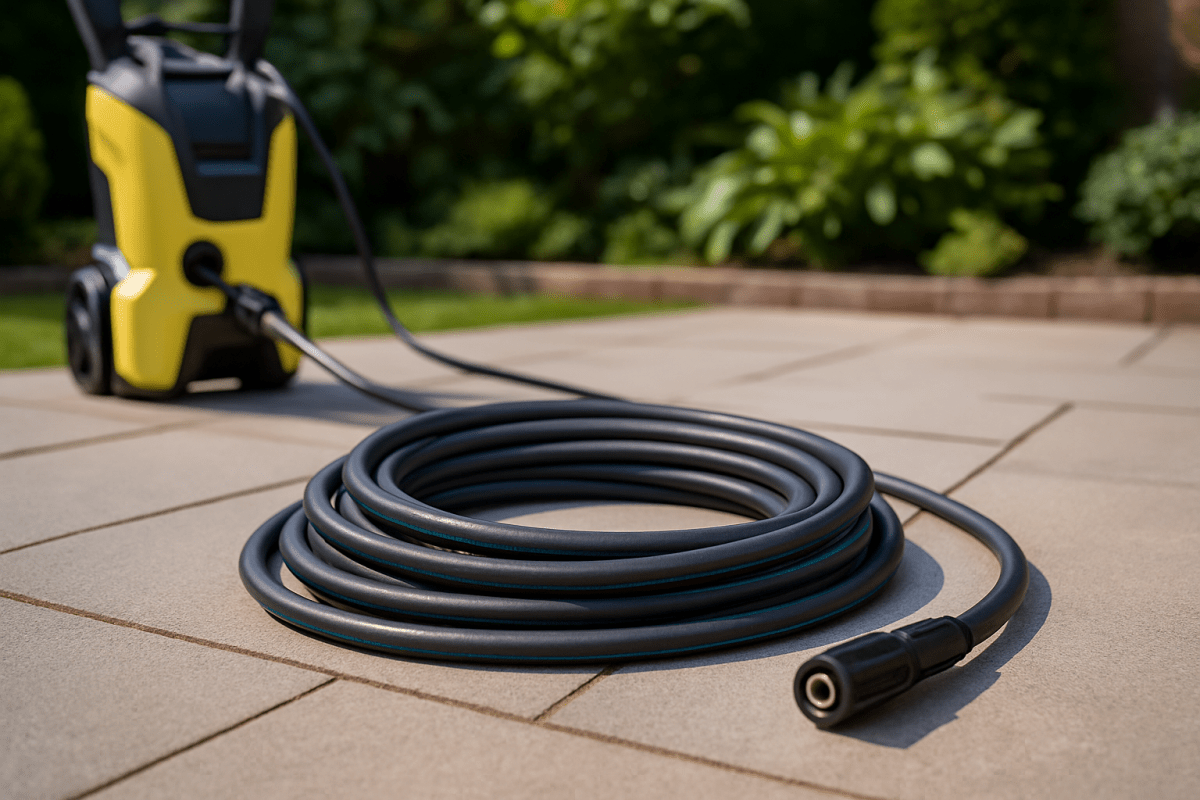
Tight coils compress the internal structure of the hose and weaken it over time. Always coil your hose in wide, even loops—ideally 40–60 cm in diameter. This prevents memory kinks and keeps flexibility high.
4. Store In A Cool, Dry Place
Leaving your hose in direct sunlight or extreme cold can cause cracking and stiffness. Store it indoors, in a shed, garage or hose reel where temperatures are stable.
5. Inspect Connectors And O-Rings Regularly
Loose fittings or worn O-rings are one of the most common causes of leaks. Check connectors before each use and replace damaged O-rings immediately—they are inexpensive and easy to swap.
6. Avoid Dragging The Hose Over Sharp Edges
Dragging a hose over brick corners, fencing, rough concrete or metal edges can wear the outer layer quickly. Lift the hose gently over obstacles or reposition the pressure washer to reduce friction.
7. Stretch Out The Hose In Warm Weather
Warmth helps soften the hose material, restoring flexibility. On sunny days, lay the hose straight for 10–20 minutes to remove stubborn memory curls, especially if it has been stored tightly for a long time.
8. Replace The Hose When It Shows Damage
Even with good care, hoses eventually wear out. Replace your hose if you notice:
- Cracking or flattening
- Persistent kinks
- Leaks near connectors
- Stiffness even in warm conditions
A new hose can dramatically improve performance and make cleaning safer and easier.